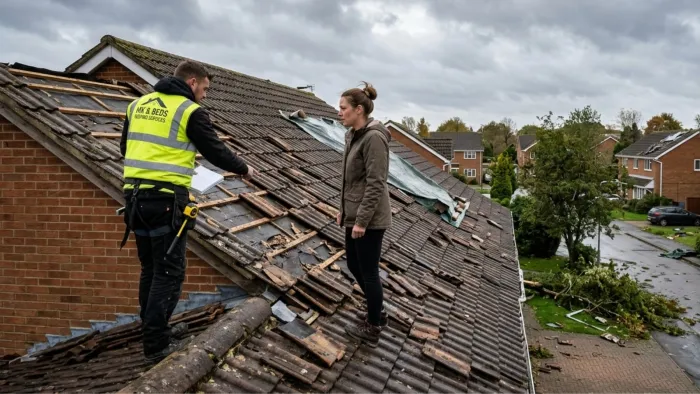
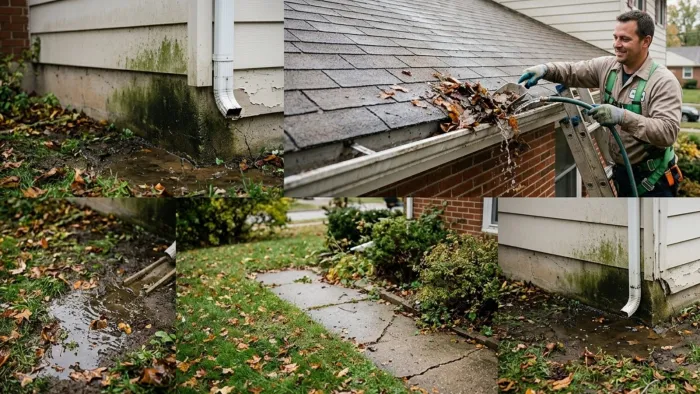
On a rainy October evening in Leighton Buzzard, two identical houses stand side by side. On one, rainwater slides off the roof, along the gutter, down the pipe, and away. On the other, it pours over a blocked gutter edge in a quiet curtain, soaking the same patch of brickwork it has soaked all autumn.
Same rain, same houses. In five years, one has originally coloured walls and dry rooms. The other has a green-streaked gable, a rotten fascia board, blown plaster in the back bedroom, and a builder’s quote that starts with a sharp intake of breath.
Guttering is the most boring subject on your house and the highest-stakes boredom you own. Here is what your gutters are quietly protecting, the signs they are failing, and what the fixes honestly cost around Bedfordshire.
What A Gutter Actually Does For You
Your roof is a rain-collecting machine. An average semi’s roof harvests tens of thousands of litres a year and concentrates all of it along two plastic channels roughly the width of your hand.
When those channels work, all that water is escorted harmlessly to the drains. When they fail, the same volume is released against the most vulnerable parts of the building: the tops of the walls, the timber trim, and eventually the ground beside the foundations.
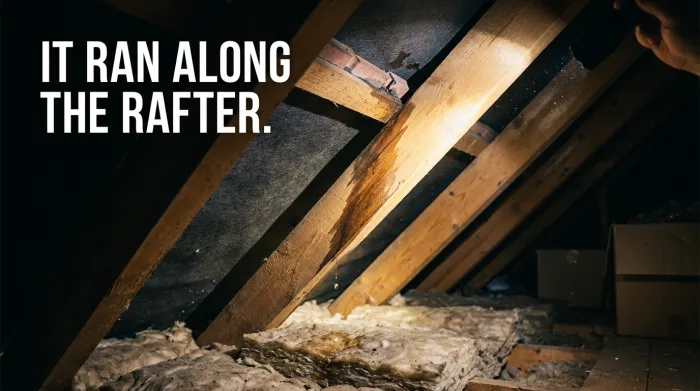
That is why gutter failure never presents as gutter failure. It presents as penetrating damp in an upstairs room, as rotten fascias and soffits, as frost-shattered brick faces where saturated masonry froze in January, as green algae racing stripes down a rendered wall, and in long-neglected cases as movement cracks where decades of overflow softened the ground below. The gutter was only ever the first domino.
The Signs Yours Are Struggling
Gutters announce trouble clearly if anyone is watching. The best time to watch is during proper rain.
Water sheeting over the edge anywhere along a run means blockage or lost fall. Drips from joints mean seals gone or brackets dropped. A waterfall from halfway up a downpipe means the pipe itself is blocked and pushing water backward.
In dry weather, the signals persist. Grass or small plants growing in the gutter are a garden where your drainage should be, common enough around here that we have removed some impressive specimens. Sagging runs between brackets hold ponds that breed mosquitoes in summer and split in the first hard frost. Green staining on the wall below maps exactly where overflow has been happening while nobody watched. And indoors, an unexplained damp patch high on an upstairs wall aligns suspiciously often with the gutter line outside.
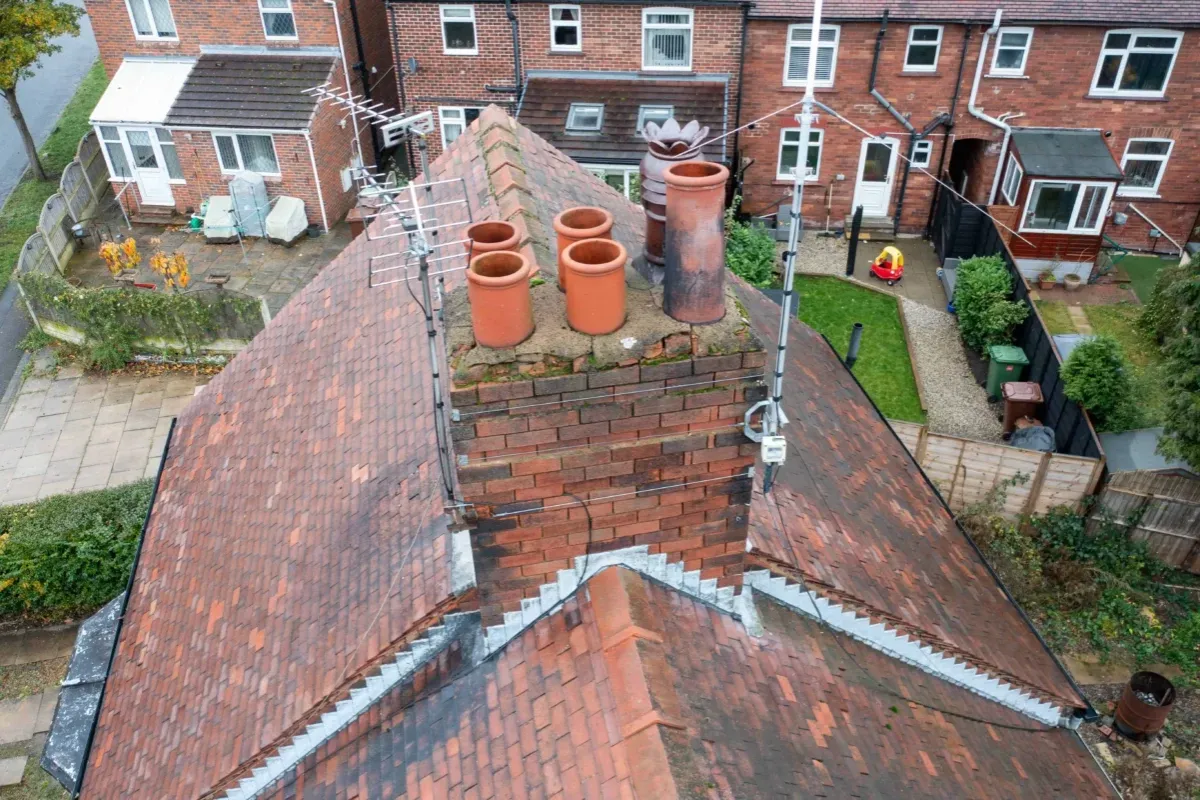
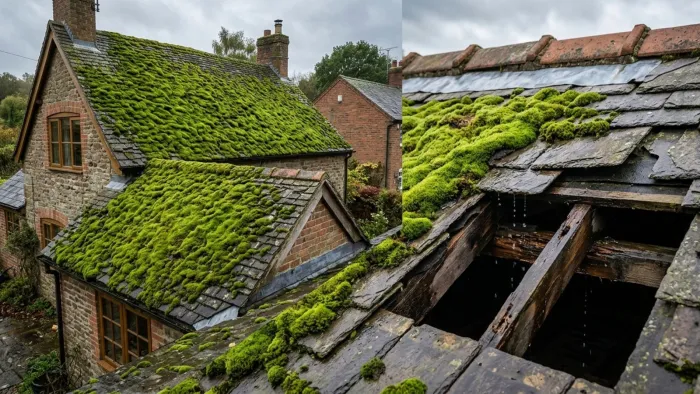
Moss deserves special mention across our patch. Roofs from Houghton Regis to Woburn carry heavy moss on their shaded slopes, and every downpour flushes another handful into the gutters. If your roof is mossy, your gutters are filling faster than your neighbour’s, and our moss guide explains what to do at the source.
The Maintenance That Costs Less Than A Takeaway Habit
Here is the whole prevention programme, honestly priced.
A professional gutter clean runs roughly £80 to £150 for a typical house and takes an hour or two. Done once a year, late autumn after the leaves are down, or twice where trees overhang, it prevents essentially the entire disaster catalogue above.
That is the full trick. There is no premium version. Compare it with what neglect invoices: fascia and soffit replacement in the high hundreds to low thousands, damp treatment and replastering in the thousands, and brickwork or movement remediation beyond that. Gutter cleaning is the single best-value maintenance purchase a homeowner can make, which is exactly why it is the one everyone forgets.
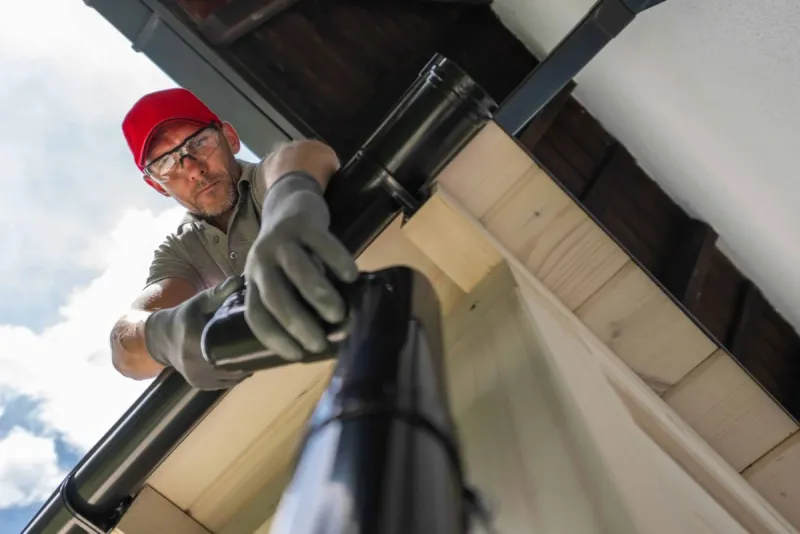
A word on doing it yourself: single-storey runs with a decent ladder, a stable base, and a helper are within reach of a confident homeowner. Anything at two-storey height, above conservatories, or involving leaning is professional territory. Falls from ladders fill A&E wards every autumn, and the £100 saved does not survive contact with one.
While cleaning, a professional also checks falls, brackets, and joints, which is how small realignments get caught years before they become replacements.
When Repair Becomes Replacement
uPVC guttering lasts 20 to 30 years, and much of the stock on local homes is reaching the end of that window. The symptoms of age differ from the symptoms of blockage: brittle plastic that cracks at every fresh screw, joints that weep no matter how often the seals are renewed, brackets whose spacing was never right, and runs that have lost their fall so completely that water stands the length of the house.
Full replacement on a typical semi costs £600 to £1,200 in standard uPVC, including downpipes, and a day or so of work. Deeper flow profiles cost little extra and make sense under large or moss-heavy roofs. If the fascias behind the gutter are rotten, replacing both together shares the access and scaffold sensibly, and if a re-roof is anywhere on your horizon, our new roof guide explains why gutter renewal belongs in that project while the scaffold stands.
As with all high-level work, the vetting rules from our choosing-a-roofer guide apply unchanged: insurance verified, company registered, quote written. Gutter work attracts the same post-storm door-knockers as roofing, with the same outcomes.
Frequently Asked Questions About Guttering
How often should gutters be cleaned?
Annually for most homes, after autumn leaf fall. Twice yearly under trees or below mossy roofs. The schedule matters more than the method.
What happens if gutters are never cleaned?
Overflow saturates walls, rots fascias, drives damp indoors, and over years attacks foundations. The repair bills run to thousands; the prevention costs around £100 a year.
How much does gutter replacement cost?
Roughly £600 to £1,200 for a semi in standard uPVC including downpipes. Combining with fascia replacement or roof work shares access costs and makes each job cheaper than done alone.
Why does my gutter overflow in rain?
Usually blockage in the run or the downpipe outlet. If clean gutters still overflow, the fall has slipped or the gutter is undersized for the roof feeding it, both fixable without full replacement.
What are the warning signs of gutter trouble?
Overflow in rain, dripping joints, green wall stripes, gutter vegetation, sagging runs, and upstairs damp patches tracking the gutter line outside.
Do you clean and repair gutters near me?
Yes: cleaning, repairs, realignment, and full replacement across Leighton Buzzard, Dunstable, Milton Keynes, Bedford, and surrounding villages, with free assessments and written prices first.
An Hour A Year Against A Ruinous Alternative
Nobody will ever compliment your guttering. Its whole reward is a list of expensive things that never happen: the damp that never appears, the fascia that never rots, the wall that never streaks green.
Buy that list for the price of an annual clean. Aqua Tight Roofing Solutions handles gutter cleaning, repair, and replacement across Bedfordshire and Milton Keynes, fully insured, with transparent written pricing and workmanship we guarantee, and 24/7 availability when a collapsed gutter cannot wait.