The most useful thing to understand about roof leaks is that water does not fall straight down.
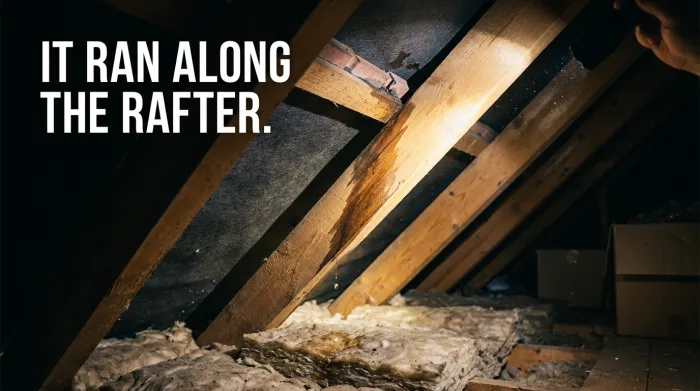
It gets in somewhere, runs along a rafter, tracks across a ceiling joist, follows a cable or a pipe, and drips through wherever it finally finds a gap. By the time it reaches your ceiling, it can be metres from where it entered, and frequently higher up the roof than you would guess.
Which is why “the leak is above the stain” is wrong far more often than it is right, and why patching directly above a damp patch so often fails.
Where leaks actually start
In rough order of how often we find them.
1. Flashings and abutments
Where the roof meets something else. A chimney, a wall, a dormer cheek, a soil pipe.
This is the single most common source of genuine roof leaks, and it makes sense: these are the joints, and joints are always the weak point. Lead perishes, mortar cracks, sealant fails. Water then runs behind the flashing and into the roof space.
2. Valleys
Where two slopes meet, water from both concentrates into one channel. That means high volume and high velocity in a narrow line. Old mortar or lead valleys fail, and the resulting leak is usually well inside the building.
3. Chimney stacks
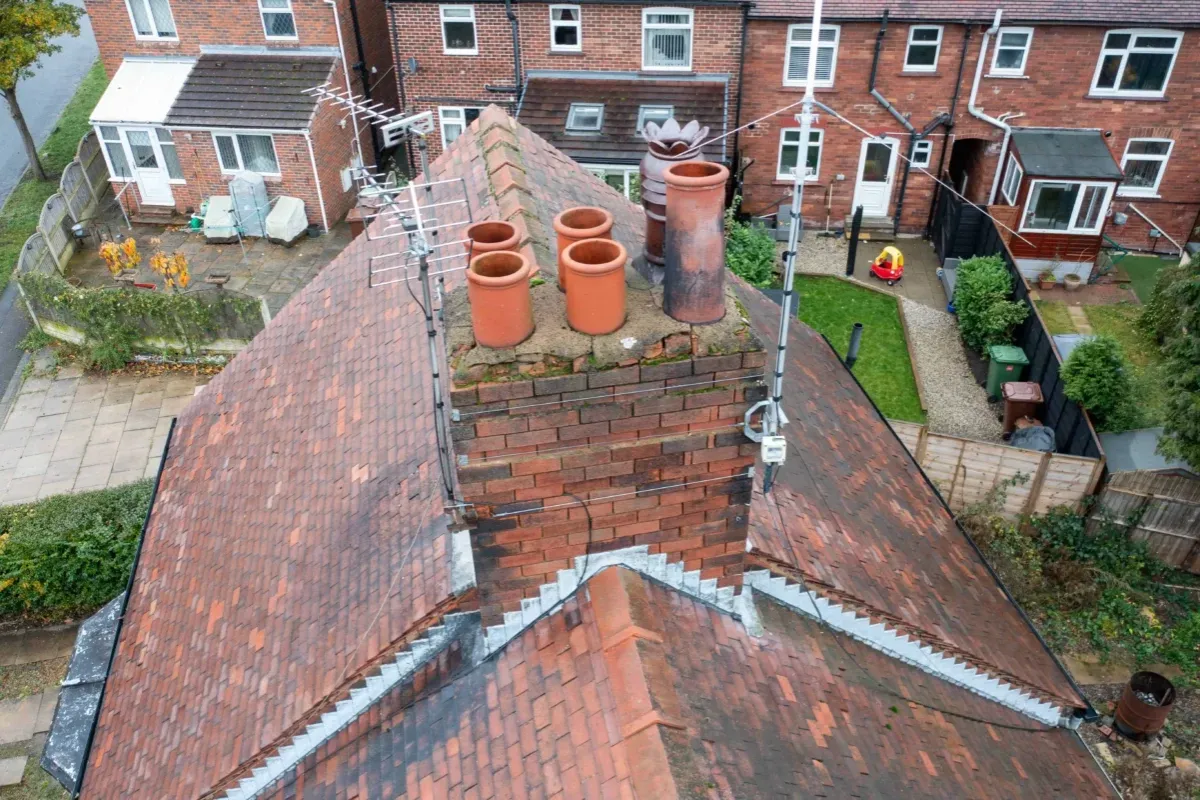
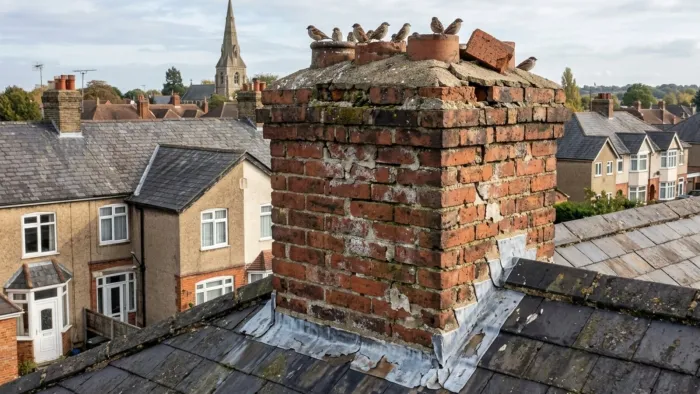
Not just the flashing but the stack itself. Cracked haunching at the top, perished pointing, a missing or damaged pot cover. Water goes into the brickwork and travels down inside the stack, often appearing in a bedroom or on a chimney breast rather than at the ceiling. We wrote separately on why chimneys fail before the rest of the roof.
4. Slipped, cracked or missing coverings
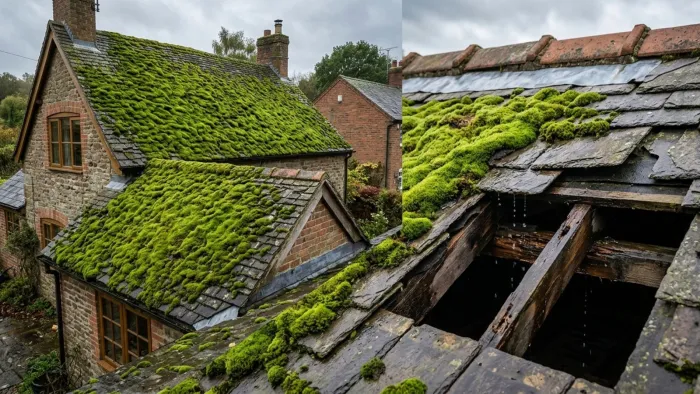
The obvious one, and less common than people expect as a cause of interior damp. A single missing tile usually lets water onto sound underfelt, which does its job. It becomes a leak when the felt beneath has already failed.
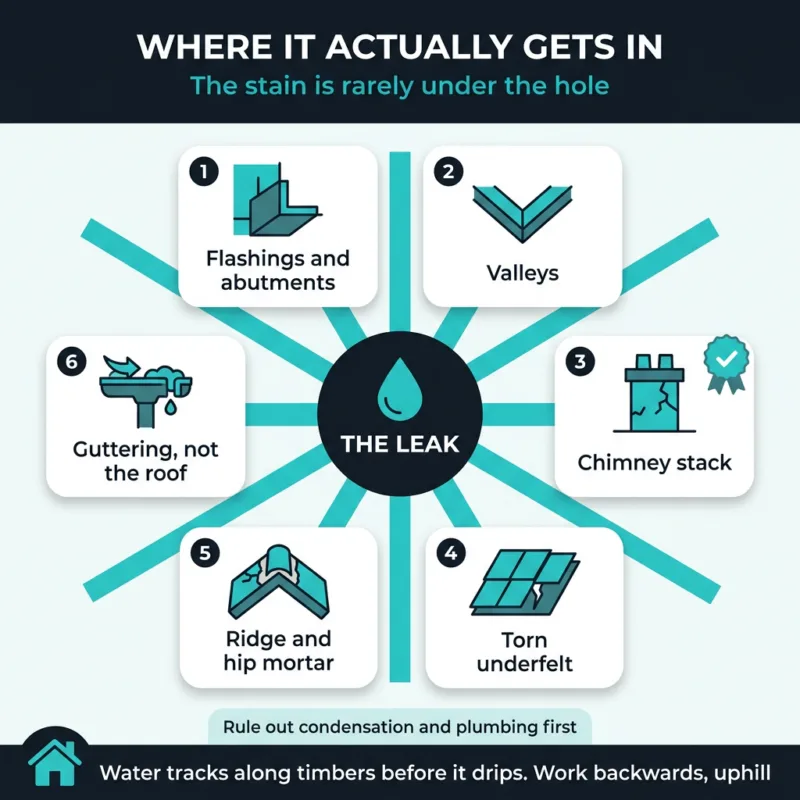
5. Failed underfelt
The roof’s second line of defence. When it goes brittle and tears, particularly at the eaves, water that gets past the tiles has nothing to stop it. This produces leaks with nothing visible wrong outside.
6. Ridge and hip
Cracked mortar bedding lets water in along the very top of the roof, which then runs down inside the roof space and appears anywhere.
7. Guttering, which is not a roof leak at all
Blocked, sagging, split or overflowing gutters send water down the wall instead of away from it. It soaks the brickwork and shows internally as damp, usually on an outside wall or at the ceiling edge.
This is a very large share of the “roof leaks” we are called to, and it is the cheapest one to fix.
Is it even a leak?
Before assuming water is coming in, rule out the two impostors.
Condensation. Loft condensation is extremely common and often mistaken for a leak. The signs: damp is general rather than in one spot, it is worse in cold weather, you find droplets on the underside of the felt or on nails, and there may be black mould on timbers. The cause is usually inadequate loft ventilation combined with warm, moist air from the house, and the fix is ventilation, not roofing.
Plumbing. Bathrooms and airing cupboards are frequently above the stain. A slow pipe or a failed seal produces a ceiling patch that looks exactly like a roof leak. The useful test: a plumbing leak does not care whether it has rained.
The rain test. Keep a note of whether the damp appears or worsens during and after rain. If it does not correlate with rain at all, look inside the house before you look at the roof.
What to do when you find a leak
Contain it. Bucket underneath, move anything valuable, and if a ceiling is bulging with trapped water, pierce it deliberately in one place with something long. It sounds wrong. It is far better than the whole ceiling coming down at once.
Turn off electrics in the affected area if water is anywhere near lighting or wiring.
Photograph everything, with dates. Useful for insurance and for whoever eventually repairs it.
Get into the loft with a torch during rain if you safely can. Seeing where water is actually running is worth more than any amount of guessing from below. Look for wet timber, tracking marks and daylight through the felt.
Do not go on the roof yourself. Wet roofs are the most common cause of serious falls in domestic maintenance, and there is nothing you can usefully do up there in the rain.
Why finding it takes longer than fixing it
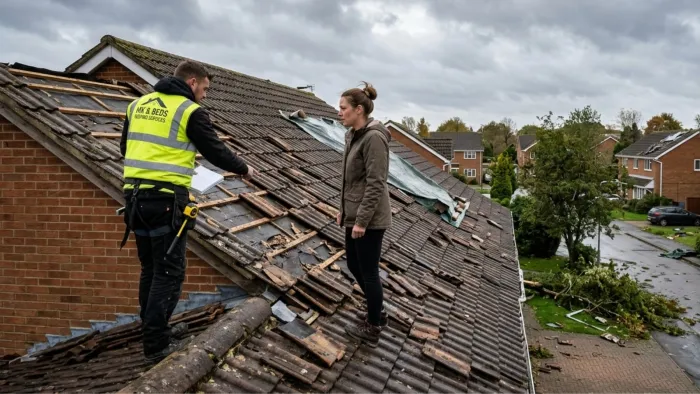
Homeowners are often surprised that we spend an hour looking and twenty minutes repairing.
That is the job. Because water tracks, the only reliable way to find a source is to work backwards from where it emerges, checking every junction uphill of it, ideally from inside the loft where the tracking is visible.
Be cautious of anyone who diagnoses a leak in two minutes from the ground. Either they have seen something genuinely obvious, in which case they will show you, or they are guessing, and a guessed repair is a repair that fails.
Frequently asked questions
Why is my ceiling damp when the roof looks fine?
Because water travels along timbers and joists before it drips, so the entry point is often metres away and higher up. It may also not be the roof at all: blocked gutters running water down a wall, loft condensation from poor ventilation, and plumbing leaks all produce damp that looks identical to a roof leak from inside.
How do I find where a roof leak is coming from?
Work backwards from where it appears. Get into the loft with a torch, ideally while it is raining, and look for wet timber, water tracking along rafters and daylight through the felt. Check every junction uphill of the damp, particularly flashings, valleys and the chimney, since those are where most genuine leaks start.
Is it a leak or condensation?
Condensation is general rather than localised, worse in cold weather, and shows as droplets on the underside of the felt or on nail points, often with black mould on the timbers. A leak is localised, correlates with rainfall, and leaves tracking marks. If damp appears when it has not rained, look at ventilation and plumbing first.
Should I go up and look at my own roof?
No. Wet or moss-covered roofs are extremely slippery, and domestic roof falls cause serious injuries every year. There is very little you can usefully diagnose from up there in bad weather anyway. Check the loft from inside instead, and let someone with the right access equipment look at the outside.
How quickly should a roof leak be fixed?
Make it safe immediately, then get it inspected promptly. Water in a roof space damages timber, insulation and plaster continuously, and a small leak left through a wet winter causes far more expense than the repair itself. Temporary containment is fine for a few days; it is not a solution for a season.
Get it found properly
Finding a leak is the skilled part. Fixing it is usually straightforward once you know where it starts.
Aqua Tight Roofing Solutions covers Bedfordshire, Buckinghamshire, Hertfordshire and Northamptonshire from our base in Leighton Buzzard. Free inspection, written quote, guaranteed workmanship. Call 07828 762441 or get in touch.