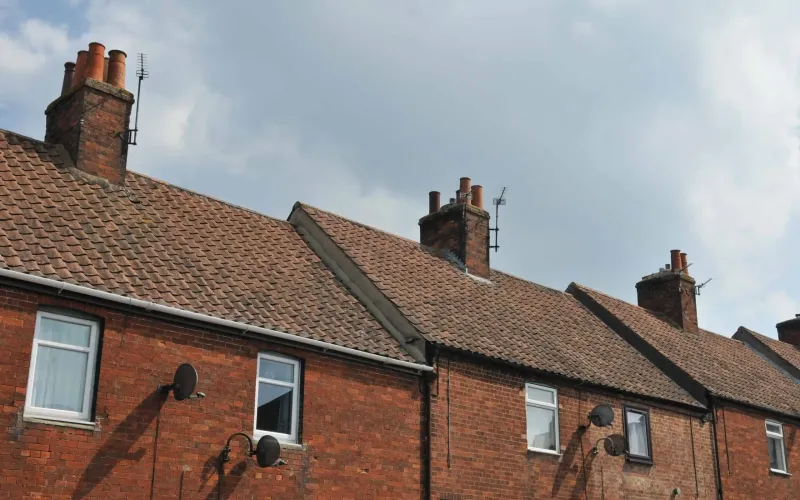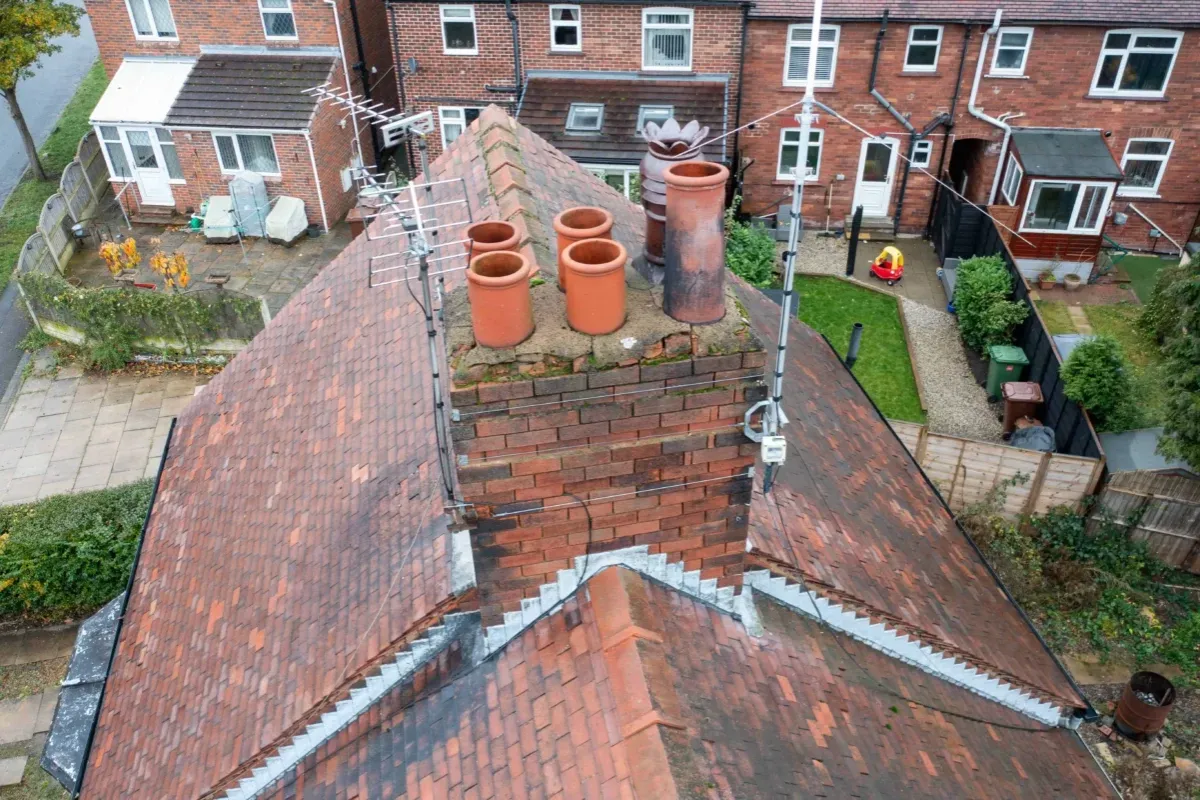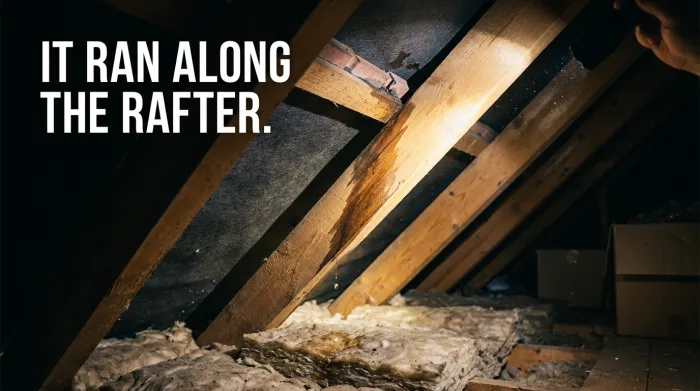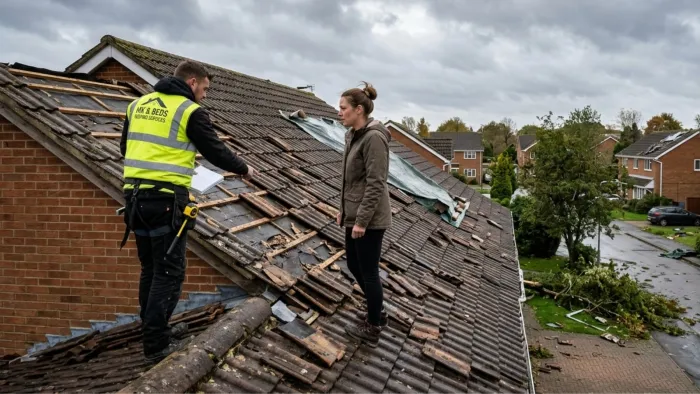
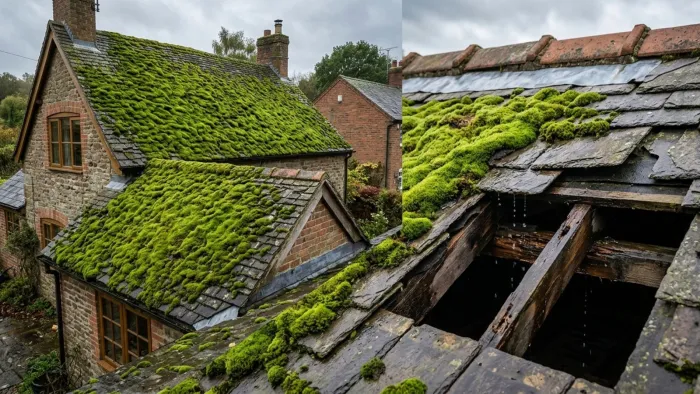
Drive any residential street from Flitwick to Newport Pagnell, and you can date the roofs by their colour. The recent ones sit clean and uniform. The older ones wear thick green cushions along their shaded slopes, like the houses grew eyebrows.
Homeowners split into two camps about it. One camp finds the moss charming, cottagey, and not worth a second thought. The other lies awake convinced it is eating the roof. The truth sits between the camps, and it depends almost entirely on how much moss, and where.
Here is the honest local guide: what moss actually does to a roof, when it crosses from cosmetic to costly, how professionals remove it without wrecking the tiles, and the one popular removal method that does more damage than the moss ever would.
What Moss Actually Does Up There
Moss has no roots and drinks no sap; it does not feed on your roof. Its damage is entirely mechanical and hydraulic, and it comes in three forms.
It holds water against the tiles. A moss cushion is a sponge that stays wet days after rain has gone. Concrete and clay tiles cope with getting wet; what ages them is staying wet through freeze-thaw cycles. Water held in the moss and in the tile surface freezes, expands, and flakes the tile face away winter by winter. The process is slow, but so is everything that ruins roofs.
It lifts the tiles. Moss colonises the sheltered gaps where tiles overlap, and as the cushions thicken they physically wedge the overlaps open. Lifted tile edges do two things: they let wind-driven rain past the overlap, and they give the next gale something to grip. A surprising share of the slipped tiles we replace after storms come off moss-heavy slopes, which is one more connection between this guide and our storm damage playbook.
It relocates to your drainage. Every downpour and every drying cycle sheds moss clumps into the gutters, and birds raking the slopes for grubs accelerate the harvest. The result fills gutters and valleys, and blocked drainage causes the whole catalogue of damp misery described in our guttering guide. For many homes this is moss’s most expensive trick, and it happens entirely out of sight.
The threshold, then: thin green film or scattered small tufts, cosmetic; continuous cushions, lifted overlaps, or constant gutter debris, actionable.
Why Your Roof And Not Next Door’s
Moss needs moisture, shade, and grip, and some roofs serve all three.
North-facing slopes dry slowest, which is why the green almost always starts there. Overhanging trees add shade and drip. And tile age matters most of all: concrete tiles leave the factory with a smooth finish that weathers rough over decades, turning the whole slope into perfect anchorage. That is why the moss arrived in your roof’s fourth decade rather than its first, and why cleaning is a maintenance cycle rather than a cure.
None of this means the roof is failing. But heavy moss on an older roof is worth a professional look for what may be underneath it, and a free survey, like ours, answers the question with photographs rather than guesses. Sometimes the moss is the story; occasionally it has been quietly hiding the real one, as our roof repairs guide details.
How Professionals Remove It (And The Method To Refuse)
Proper moss removal is unglamorous manual work. Scraping and brushing by hand, tile by tile, from ladders, access equipment, or the scaffold if one is up for other work. Done carefully, it removes the cushions without disturbing the tiles, followed by clearing every gutter and valley of what came off, which must be part of the job, not an extra.
Then comes the part that determines how long the clean lasts: a biocide treatment applied across the slopes kills the remaining spores and film, pushing regrowth years further out than scraping alone. Finally, copper ridge strips fitted along the top of the slopes release trace copper in every rainfall, inhibiting new growth down the slope below. On shaded, tree-adjacent roofs, moss will still stage a comeback eventually, but the combination of clean, treat, and copper stretches the cycle impressively.
Expect £400 to £800 for a typical semi, varying with size, pitch, and access, gutter clearing included.
And the method to refuse: pressure washing. It is fast, satisfying to watch, and quietly destructive. The jet strips the weathered-but-protective surface layer from concrete tiles, opening the pores wider than ever, drives water up under the overlaps into the felt and battens, and can shift the tiles themselves. The roof looks new for a season, grows moss back faster on its newly roughened surface, and has lost years of life in the trade. When a quote involves a pressure washer on your tiles, the correct response is a polite no, whatever the price. The same twenty-minute vetting from our choosing-a-roofer guide sorts the careful firms from the jet-wash brigade.
The Once-A-Year Habit That Keeps It All Small
Moss control belongs inside the simplest maintenance routine a homeowner can run, and it takes one afternoon a year, from the ground.
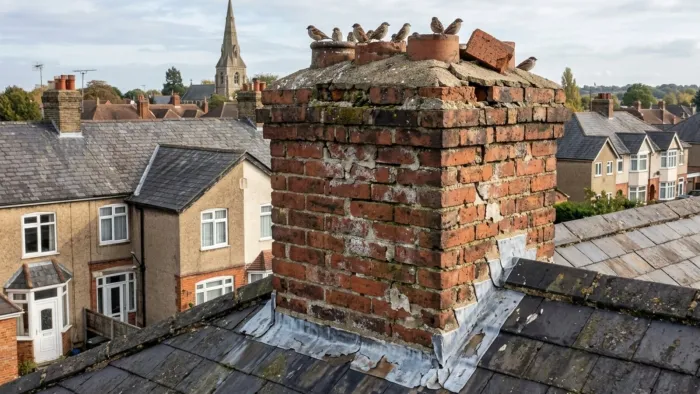
Each autumn, walk the house and look up: moss thickening on the shaded slope, tiles lifted or slipped, gutters carrying greenery, mortar crumbling on ridges and chimney (our chimney guide explains why that one matters). Photograph the roofline from the same spots each year; the comparison spots change faster than memory does. After any named storm, repeat the walk.
Caught annually, everything on that list is a small job. The £500 moss clean happens once or twice a decade instead of never; the gutters flow, the tiles stay seated, and the roof quietly serves its full fifty years. Neglected, the same list compounds into the four-figure winter emergencies that fill our phone every January.
Frequently Asked Questions About Roof Moss
Does moss actually damage a roof?
Heavy moss does: freeze-thaw acceleration, lifted tile overlaps, and blocked drainage. Light films and scattered tufts are cosmetic. Thickness and coverage make the difference.
Should I pressure wash my roof?
No. It strips tile surfaces, forces water under overlaps, and shortens roof life for a temporary result. Manual removal plus biocide achieves more and harms nothing.
How much does professional moss removal cost?
Typically £400 to £800 for a semi, including gutter clearance afterwards. Copper ridge strips and biocide treatment added at the same time stretch the result by years.
Why does my roof grow so much moss?
Shade, moisture, trees, and ageing tile surfaces. North slopes on roofs past their third decade are moss’s favourite habitat, which describes half the housing stock in the county.
Do copper ridge strips work?
They genuinely help. Copper traces in rain runoff inhibit regrowth down-slope, multiplying the life of a proper clean, especially away from heavy tree cover.
Do you remove moss near me?
Yes, safe manual removal, biocide treatment, copper strips, and full gutter clearance across Leighton Buzzard, Flitwick, Ampthill, Milton Keynes, Bedford, and surrounding areas, with free surveys first.
Green Should Stay In The Garden
A little roof moss is British character. A lot of it is a slow, quiet subsidy paid to your gutters, your tiles, and eventually your repair fund. The difference is visible from your own front path once a year, and the fix, done properly, is neither drastic nor dear.
Aquatight Roofing Solutions provides moss removal, roof and gutter maintenance, and free photographic surveys across Bedfordshire and Milton Keynes, fully insured, transparently priced, and guaranteed, with never a pressure washer in sight.