Somewhere behind almost every home in Bedfordshire and Milton Keynes, a flat roof is quietly doing its job. The kitchen extension, the garage, the dormer, the porch. Nobody thinks about these roofs at all, until the ceiling below develops a stain shaped like Wales.
Flat roofs earned a poor reputation in Britain, and the old felt systems of the 1970s and 80s deserved much of it. Ten hot summers, ten freezing winters, and the felt cracked, bubbled, and let go. But the materials have changed completely, and a flat roof fitted today with the right system should outlast most of the promises made about it.
The catch is that three very different systems now compete for the job, at three different price points. Here is the honest comparison we give customers from Leighton Buzzard to Bletchley, and how to tell which one your roof actually needs.
Felt: The Budget Worker That Improved
Modern torch-on felt is a different product from the stuff peeling off garages across the county. Laid in two or three layers with a mineral cap sheet, a good high-performance felt system seals well and remains the cheapest route to a dry roof.
Costs roughly £40 to £80 per square metre installed. Expect 10 to 15 years from standard felt and up to 20 from the high-performance grades, if the detailing is done properly.
Felt earns its keep on garages, sheds, and budget-driven jobs where the roof is simple and nobody walks on it. Its weaknesses remain the old ones, softened but not cured: joints and seams that depend entirely on the installer’s skill, and a dislike of standing water that shortens its life wherever ponding forms.
EPDM Rubber: The Sensible Default
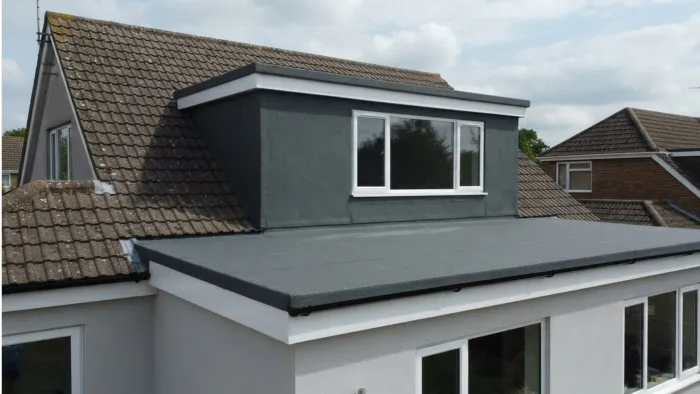
EPDM is a synthetic rubber membrane, fitted as a single sheet cut to your roof, usually with no joints anywhere in the open field of the roof. No joints means the most common flat roof failure point simply is not there.
Costs roughly £80 to £120 per square metre installed, and a properly fitted EPDM roof is realistically a 25 to 30 year covering. The material shrugs off UK weather extremes, stays flexible in frost, and tolerates the leaves-and-birds reality of a roof behind a semi in Dunstable far better than felt ever did.
For the standard jobs that make up most of our flat roof work across Bedfordshire, the kitchen extension, the garage, the flat-roofed bay, EPDM is the recommendation we make most often. It hits the durability-per-pound sweet spot and looks clean and tidy from the bedroom windows above.
Its limits: it prefers simple shapes, it is not designed for regular foot traffic, and on a highly visible roof terrace some owners prefer the finished look of fibreglass.
GRP Fibreglass: The Premium Finish
GRP is laid wet as resin and glass matting over the deck, then top-coated, curing into a single rigid shell with no joints anywhere. Done well, it is the toughest and best-looking system of the three.
Costs roughly £100 to £150 per square metre installed, with a realistic 25-plus year life. GRP handles complex shapes, upstands, and awkward details beautifully, takes foot traffic in its stride, and comes in coloured finishes that suit balconies and roofs you actually look at or walk on.
The trade-offs are the price and its fussiness during installation: GRP needs dry weather and correct curing, and a rushed or damp lay shows up later as cracking. On large roofs, expansion detailing matters. This is the system where the installer’s competence is most visible in year ten.
The Decision In Three Questions
Strip away the brochures, and the choice usually resolves in minutes.
- What is the roof over? Living space (extension, dormer, anything with a ceiling below that you would mind losing): EPDM or GRP, because the cost of failure is high. Garage or shed: felt remains a rational choice, or EPDM for the longer horizon.
- Will anyone walk on it? Regular access, balcony use, window cleaning routes: GRP. Occasional maintenance access only: EPDM copes fine.
- What is the budget horizon? If this is a forever home, the per-year cost of EPDM and GRP beats felt comfortably. If the roof just needs to be sound and dry for the medium term, high-performance felt priced honestly is nothing to apologise for.
And one question we would ask that you might not: what state is the deck in? No membrane rescues rotten decking. A proper survey lifts the questions before the quote answers them, which is why ours are free and come with photographs of what we find. Any quote produced without looking under the surface of a failing roof is guesswork.
The Ponding Problem Nobody Mentions
“Flat” roofs are not flat. Every one should be laid with a small fall so water drains rather than sits. A surprising amount of the flat roof trouble we attend across Milton Keynes and Bedfordshire traces back to roofs that pond: water pooling in the same low spot after every rain, working at the surface, finding every seam and pinhole, freezing and prising them wider each winter.
If your current roof holds puddles for days after rain, note it and mention it, because a straight re-cover will inherit the same problem. The fix at replacement time, fitting the deck to create proper falls or repositioning outlets, costs modestly and adds years to whichever membrane goes on top. Speaking of outlets: keep the gutters and downpipes serving a flat roof clear, or the best membrane in the world ends up underwater. Our guttering guide covers that side of the story.
Frequently Asked Questions About Flat Roofing
What is the best flat roof material in the UK?
EPDM rubber for most homes: 25 to 30 years, one sheet with no joints, mid-priced. GRP where the roof is walked on or complex. Modern felt where budget rules and the roof is simple.
How much does flat roof replacement cost in 2026?
Felt roughly £40 to £80 per square metre installed, EPDM £80 to £120, GRP £100 to £150. A typical single garage runs £1,000 to £2,500 all-in depending on system and deck condition.
How long do flat roofs last?
Felt 10 to 15 years (up to 20 for high-performance), EPDM 25 to 30, GRP 25 plus. The installer’s detailing shifts every figure more than the material choice does.
Can a flat roof be repaired instead of replaced?
Yes, when damage is isolated and the deck is dry: patches, joint repairs, and localised fixes are routine. Widespread blistering, soft spots underfoot, or serial leaks mean the membrane is done.
Why does my flat roof keep leaking?
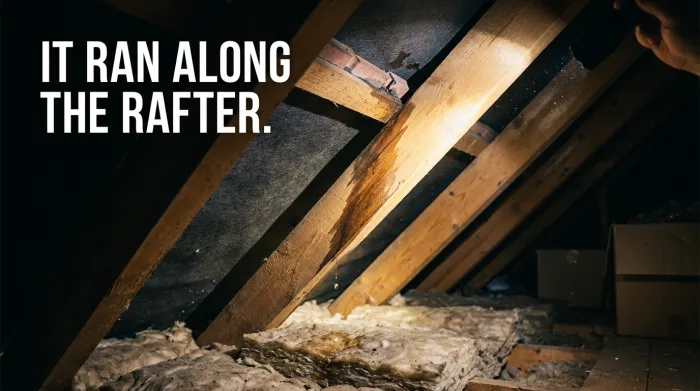
Aged felt, failed edge and upstand details, and ponding water are the usual suspects. Leaks also travel: where water shows inside is rarely where it enters. A survey with photographs beats bucket-placement as a strategy.
Do you install flat roofs near me?
We fit felt, EPDM, and GRP systems across Leighton Buzzard, Milton Keynes, Dunstable, Bedford, and the surrounding areas, on homes and commercial buildings, with free surveys and written quotes first.
Get The Right System, Fitted Right
The flat roof conversation has moved on from “felt again, I suppose.” The right modern system, matched to your roof’s job and fitted with proper falls and details, is a 25-year solution to what used to be a 12-year headache.
Aqua Tight Roofing Solutions installs and repairs all three systems across Bedfordshire and Milton Keynes, fully insured, workmanship guaranteed, with free site surveys and transparent written pricing before any decision is asked of you.
Call us or email info@aquatightroofingsolutions.co.uk, and we will tell you honestly which system your roof needs, including when the answer is just a repair.