Stand on any street of older homes in Bedford, Dunstable, or Luton and count the chimneys. Rows of them, marching along the terraces and semis, most no longer connected to so much as a gas fire. They are the oldest structures on their roofs, built for a coal-burning world, and they have been standing in the weather for eighty to a hundred and forty years.
Now consider what they endure. The highest, most exposed masonry on the house. Rain on every face, frost in every joint, wind loading in every storm, and for decades, corrosive flue gases from the inside out. No other part of the building works so hard for so little attention.
So it is no surprise that when we survey roofs across Bedfordshire, the chimney is the most common failure point we photograph. Here is what goes wrong up there, what the signs look like from the ground and from the spare bedroom, and what putting it right honestly costs.
How A Chimney Fails: A Short Anatomy
A chimney is a simple tower with four weak points, and they fail in a predictable order.
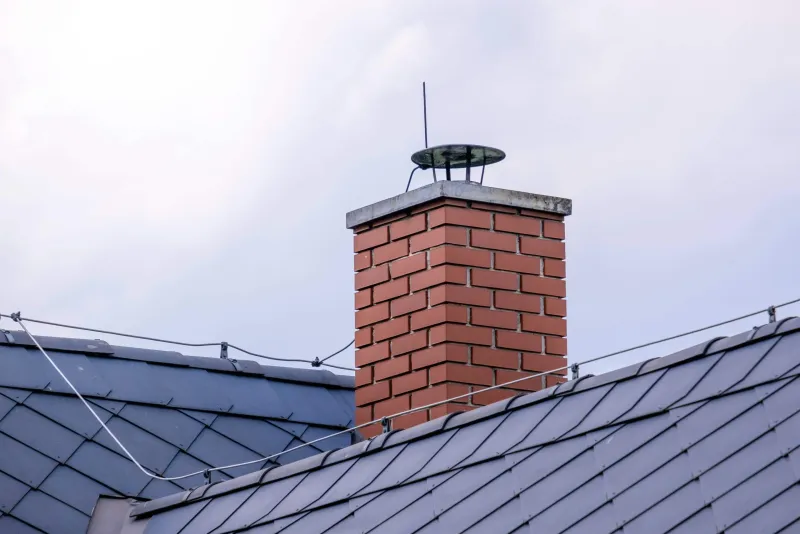
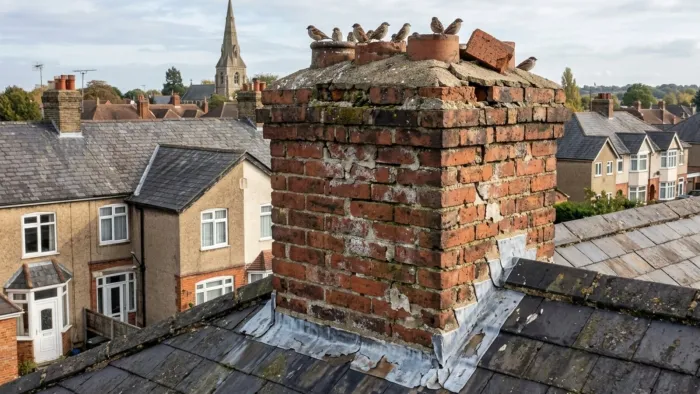
The mortar joints go first. Victorian and interwar stacks were built with lime-rich mortars that slowly sacrifice themselves to the weather, which was the design. After enough decades, the joints recede, crack, and let rain into the core of the stack. Saturated brickwork then freezes, and frost does the demolition one flake at a time. This is why repointing is the chimney job we do most.
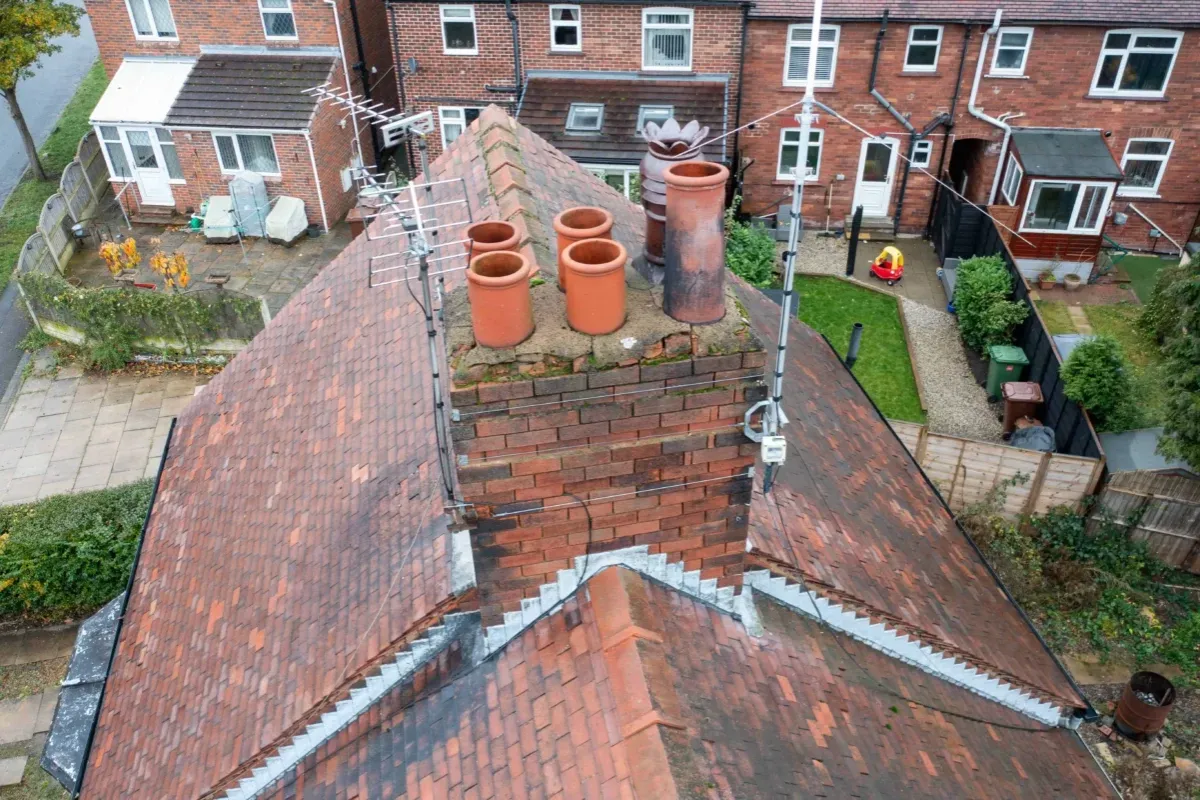
The flaunching cracks. That is the mortar crown holding the pots on top. Once cracked, it funnels rain directly into the stack’s core, and loose pots become a genuine hazard in the gales that sweep across the open country here.
The flashing junction leaks. Where the stack meets the roof, lead flashing seals the joint. The lead itself lasts generations, but the mortar chases holding its edges do not, and slipped or lifted flashing is one of the most frequent sources of “mystery” ceiling stains on older homes. If a damp patch appears near a chimney breast after rain, this junction is suspect number one.
The stack leans. The end stage. The weather side decays faster than the sheltered side, the stack begins to tilt, and what remains is a quarter-tonne of loose masonry standing over your bedroom ceiling in a storm belt. A visible lean is the point at which a survey stops being advisable and becomes urgent.
The Signs, From The Ground And From Indoors
No ladder required for the first inspection. From the pavement, with your phone camera zoomed:
- Receded or missing mortar lines near the top of the stack
- Spalled bricks, faces flaked away, leaving soft red wounds
- Cracked or vegetation-sprouting flaunching, and pots sitting unevenly
- Staining down the stack’s outside, mapping where water runs
- Any lean at all against the vertical of a neighbouring stack
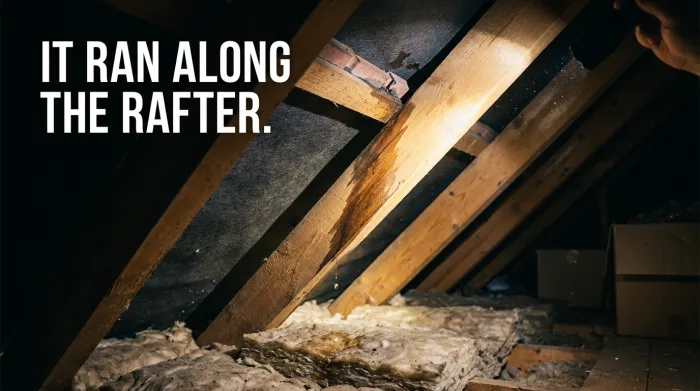
Indoors, the chimney reports through the rooms it passes. Damp patches on chimney breasts, upstairs especially, after driving rain. Brown tar-like staining bleeding through decoration on breasts of old open-fire flues. A musty smell from a sealed-up fireplace, which usually means the flue was capped without ventilation and condensation is doing quiet damage. And in the loft, staining or white salt bloom on the brick where the stack passes through, which is the earliest indoor warning most homes ever get.
That loft check takes two minutes with a torch and pairs naturally with the roof checks in our repairs guide.
What The Fixes Honestly Cost
Chimney work prices vary with one factor above all: access. The stack is the highest point of the house, and reaching it safely often means scaffolding.
- Repointing a typical stack: £400 to £1,200, depending on size, height, and how much joint depth has been lost
- Reflaunching and rebedding pots: £200 to £600
- Flashing renewal around the stack: £200 to £600
- Partial or full rebuild above the roofline: £1,500 to £4,000, occasionally more for large or double stacks
- Capping and venting an unused flue: £150 to £400
The scaffold reality shapes the strategy. If scaffolding is going up for any reason, a re-roof as in our new roof guide, gutter and fascia renewal, even major repairs, price the chimney work at the same time. Sharing one scaffold between two jobs routinely saves several hundred pounds against doing them a year apart, and it is the single most useful money tip in this article.
One caution born of experience: chimney work has a cowboy problem. It is high, hard to inspect from the ground, and easy to fake with a smear of mortar that washes out in two winters. Photographs before and after, itemised written quotes, and a verifiable insured firm are non-negotiable, and our guide to choosing a roofer sets out the full twenty-minute vetting routine. We provide before-and-after photography on every chimney job as standard, because you should never have to take a ladder’s word for it.
The Unused Chimney Question
Most stacks around here no longer serve a fire, which tempts two bad ideas: ignoring them entirely, or sealing them shut like a tomb.
Ignoring fails because the weather does not care whether the flue is used; the masonry decays on the same schedule either way, and an abandoned stack over a bedroom deserves the same maintenance as a working one.
Hermetic sealing fails differently. A flue is a moisture column through the whole house, and blocked at both ends it condenses that moisture into the chimney breast, producing the damp, musty, stained results we get called to diagnose every winter. The correct treatment is simple and cheap: cap against rain at the top, ventilate at top and bottom, and the flue stays dry indefinitely.
And where a stack is truly redundant and badly decayed, taking it down below the roofline and roofing over is sometimes the most economical permanent answer. It is not right for every house, but it belongs on the options list, and an honest surveyor will tell you when.
Frequently Asked Questions About Chimney Repairs
How much does chimney repointing cost?
Typically £400 to £1,200 per stack, with access driving the spread. Bundling with other scaffold-based work cuts the effective price substantially.
Why is my chimney breast damp?
Failed flashing, porous mortar, cracked flaunching, or a sealed-but-unventilated flue. Each has a distinct fix, which is why diagnosis precedes quoting on our surveys.
Do unused chimneys need maintenance?
Yes: the weather attacks them regardless of use. Cap against rain, ventilate against condensation, and maintain the masonry like the roof it stands on.
What is flashing and why does it leak?
The lead sealing where the stack meets the roof. The lead endures; its mortar fixings age out, and water then tracks into ceilings below. Renewal is routine and reasonably priced.
Is a leaning stack dangerous?
Treat it as such. Lean means one side’s mortar has substantially failed, and storms find compromised stacks. Prompt professional assessment, please, not pavement monitoring.
Do you repair chimneys near me?
Across Bedford, Dunstable, Luton, Leighton Buzzard, Milton Keynes, and surrounding villages: repointing, flashing, rebuilds, and capping, with free surveys and photographic evidence throughout.
Respect The Old Tower
Your chimney has outlasted every appliance it ever served and most of the roofs it has stood through. With mortar joints renewed once a generation and its junctions kept sealed, it will outlast a few more.
Aqua Tight Roofing Solutions surveys, repoints, reflashes, and rebuilds chimneys across Bedfordshire and Milton Keynes, fully insured and qualified, with written transparent pricing, guaranteed workmanship, and before-and-after photographs on every job.